Czechoslovakia during the Prague Spring and normalization
The Glass RoomCzechoslovakia during the Prague Spring and normalization is the political setting against which the novel’s late return to the Landauer House acquires its double meaning: an opening toward the West offers a chance to acknowledge past wrongs, but the Soviet intervention that follows signals the restoration of the old order. Through a proposed public handover, Liesel’s reunion with Hana, and Doctor Tomáš’s account of a country falling back into political sleep, the period is rendered not as a detached chronology but as a struggle over who may speak for the past and what kind of future remains possible.
An Opening and an Invitation
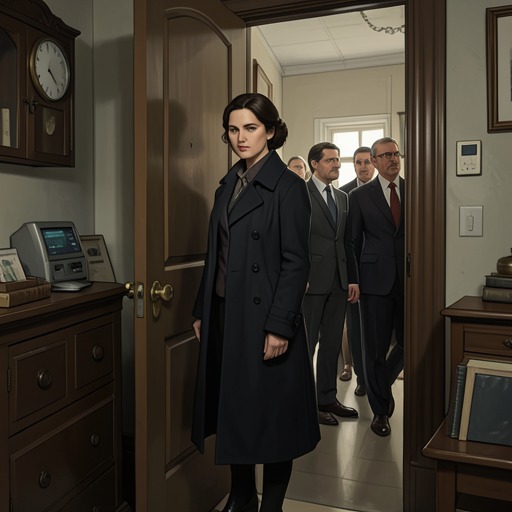
The political change reaches the Landauer family in the form of an invitation from Město’s authorities. They ask Liesel to witness the handover of the house, with the city offering to cover all expenses. Veselý presents the invitation as part of a new approach: the country wants to restore normal relations with its neighbours, talk about the past, and admit previous errors. He invokes “Socialism with a human face” and describes the visit as part of an opening to the West. The invitation thus makes political change concrete: a former refugee is being asked to return to the property from which her family was separated.
That opportunity is also a legal and political risk. Martin Landor warns that accepting could amount to recognizing the city’s legal ownership of the house. He suspects the authorities want his mother’s presence to validate the confiscation and use her in a political game. Veselý counters that the opening is consequential for the people of Czechoslovakia, not merely a matter of official public relations. The exchange keeps symbolic recognition and material redress distinct: inviting Liesel to bear witness may acknowledge a changed political climate, but it does not itself settle who owns the house.
Return, Memory, and the Limits of Reconciliation
The invitation brings the country’s recent history into the family’s present. Liesel’s relatives had believed her dead after hearing that she was arrested and deported in 1942. Her mother recalls that the postwar expulsion of Germans and the displacement of people trying to return made information difficult to obtain. The family’s Jewish relatives had been murdered in the camps, and the Iron Curtain then seemed to make the country disappear from reach. Liesel’s reappearance therefore exposes a past that official gestures toward reconciliation cannot neatly contain: the family has endured persecution, bereavement, exile, and decades of separation from news of her fate.
The contrast between the official invitation and the family’s response makes return more complicated than a ceremonial homecoming. Martin focuses on the possible legal effect of acceptance, while Veselý asks the family to regard the visit as part of a wider political transformation. Neither position removes the history that gives the house its meaning. A change in diplomatic language may allow contact and testimony, but the consequences of dispossession and the uncertainty over ownership remain present in the very act of returning.
The Soviet Return and Normalization
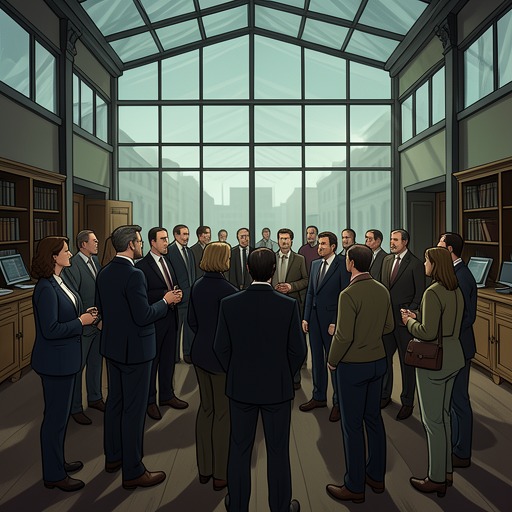
When Liesel revisits the Glass Room, the political hopes associated with reform have already been overtaken by the Soviet invasion. She is crowded by guests while a local official praises the house’s place in European architecture; seeking relief, she asks Hana to take her out to the terrace. There Hana explains that Laník, whom Liesel remembers with suspicion, is now a Party official. She describes the country as ruled by people like him and says that the Soviet Army has returned in the name of liberation. The irony of that language is sharpened by the familiar figure of the opportunistic official: political reversal does not simply replace one set of rulers but restores people and habits that seemed on the point of being displaced.
Asked what will happen next, Hana names the coming period as normalization and expects the Švejks to return, if they ever truly left. Her answer is deliberately bleak. The term for political stabilization promises regularity, but in the conversation it means the likely reinstatement of the same compliant or self-serving figures. Meanwhile, the speech inside continues to call the Glass Room a jewel of domestic architecture. The contrast places public celebration beside private recognition that the political opening has closed.
Political Stasis and the House Across Time
Doctor Tomáš gives the political reversal a different explanation when Liesel asks whether “Socialism with a human face” is over. He compares the country to people who suffered from encephalitis lethargica, a sleeping sickness: after decades in a suspended state, some woke following treatment with L-Dopa, only for the drug’s effects to wear off and the patients to sink back into sleep. Tomáš says the same relapse is occurring in his country and fears that he will soon be reduced to sweeping the streets. His analogy makes the end of reform feel less like a settled outcome than a brief awakening followed by renewed political paralysis.
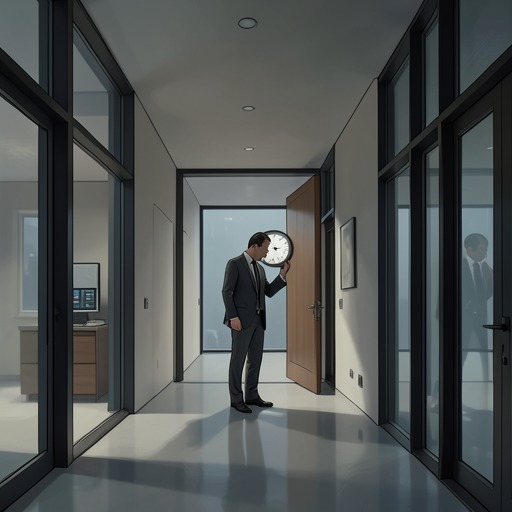
The image also connects the period to the Glass Room’s peculiar relation to time. The room is described as balanced and rational, framed in rectilinear lines and seemingly able to deny time’s existence; the political history around it repeatedly defeats that illusion. A house once associated with modernist possibility becomes the setting for a disputed handover, a speech about architectural heritage, and conversations about renewed repression. Its apparent timelessness cannot protect the people who enter it from the return of history. At the same time, the later encounter between Ottilie and Marie Delmas unfolds in the same room, where its ageless appearance meets identities and memories altered by decades of separation. The Glass Room preserves the possibility of recognition, but neither its architecture nor a temporary political opening can restore the lives that history has taken away.